
Celluloid: A Material That Shaped the Modern World
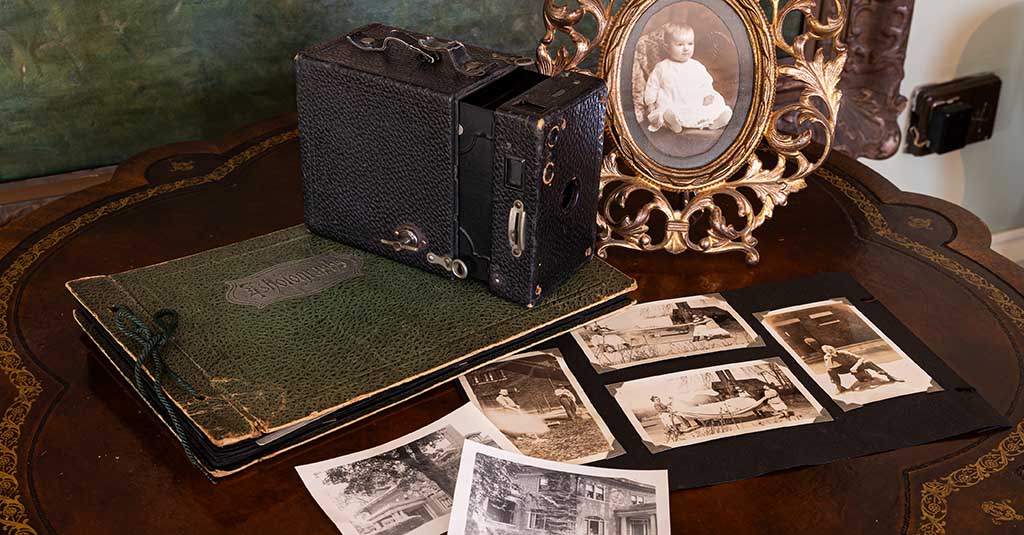
It was developed in the mid-19th century as a substitute for natural materials such as ivory and tortoise shells that were becoming scarce or expensive. Demand was such that inventors were incentivized with prizes to find lucrative alternatives that allowed manufacturers to turn out an attractive, affordable product and a profit, too. Celluloid was tough, flexible, and easy to mold – it became the ideal solution and began to appear everywhere – from photographic and motion picture film to jewelry, toys, combs, and toiletry sets.
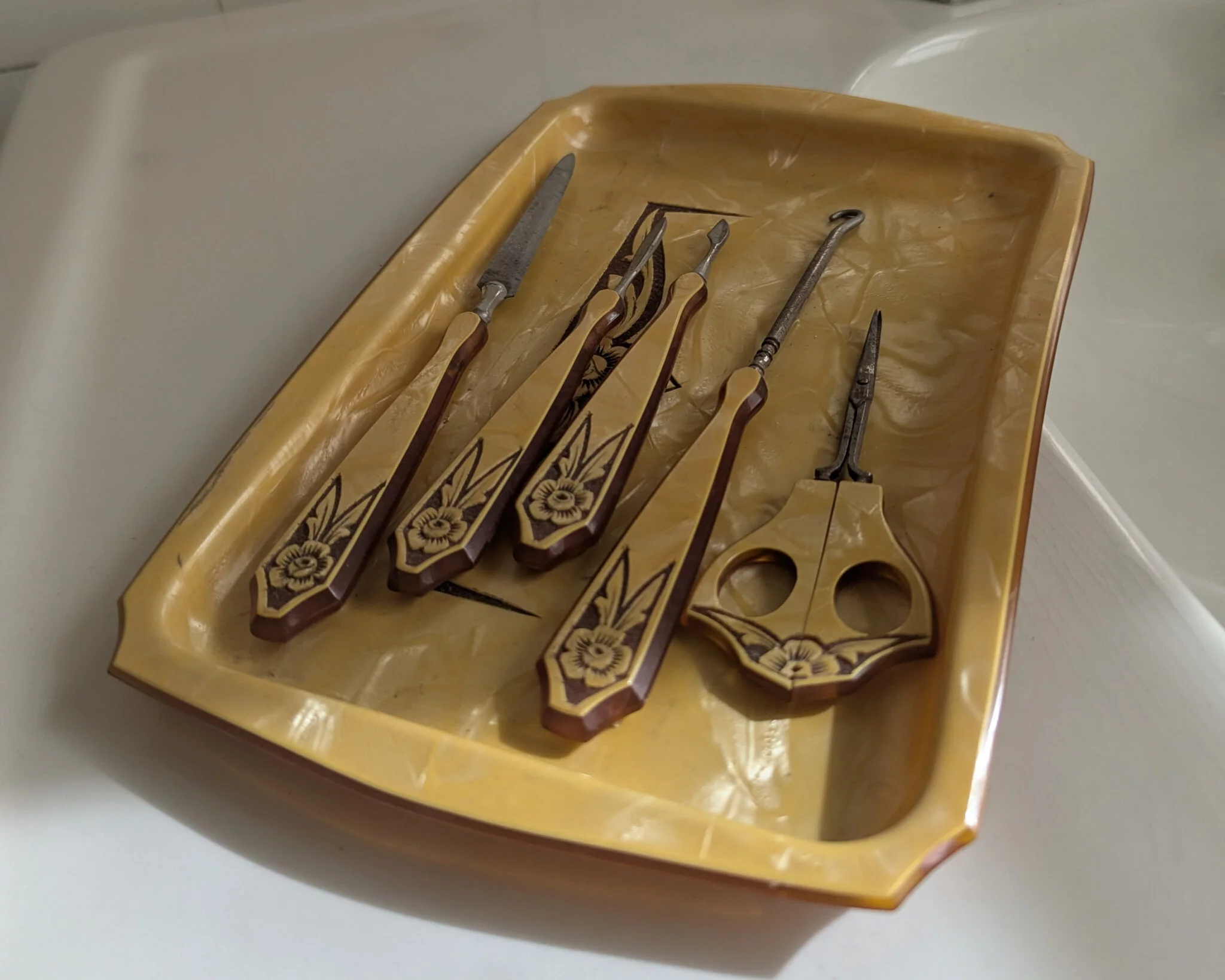
The Hoyt’s Period House features several celluloid dresser sets in the Guest Room and Master Bedroom. Though simple in appearance, these items represent a major shift in how household goods were made and sold, as well as who could afford to buy them.
Despite its popularity, celluloid did have a serious drawback – it was extremely flammable. As safer plastics were developed in the 20th century, celluloid was gradually phased out. Still, its legacy remains. Celluloid paved the way for modern plastics and changed how everyday objects were designed, produced, and made accessible to the public.